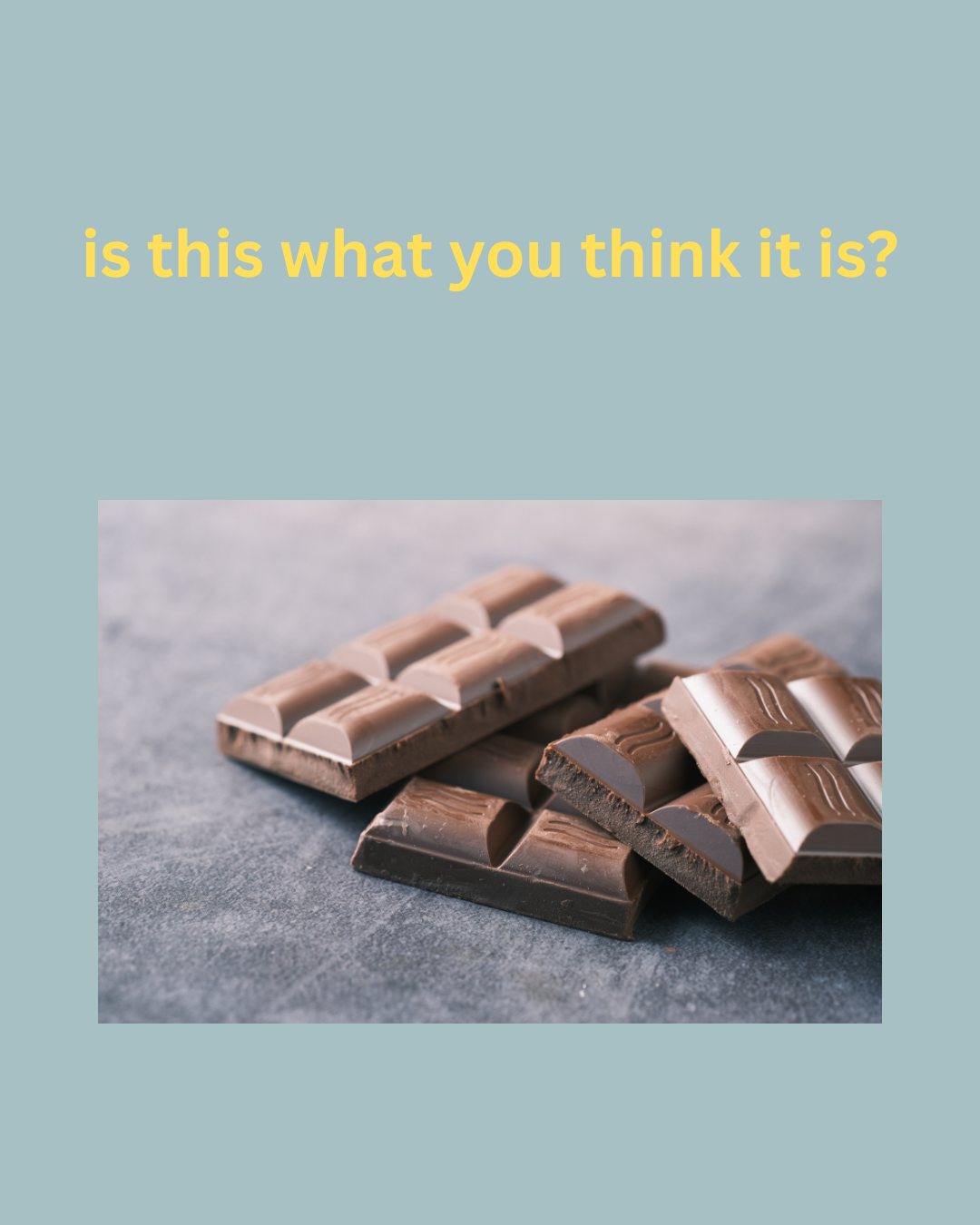
This looks like chocolate, right?
Well it may not be.
What is chocolate?
In the UK the definition of chocolate is a product that contains a minimum of 20% total cocoa solids and 20% milk solids, and it can legally contain up to 5% vegetable fat other than cocoa butter.
Working with my clients it is clear that:
- Many of us eat chocolate daily.
- Many of us eat chocolate more around period time.
- Lots of us use chocolate as a pick me up – when mental, physical or emotional energy is down.
- Chocolate is often a treat for ourselves or our children.
Thing is, lots of what we consume shouldn’t be called chocolate at all according to the minimum definitions set down by law.
Cadbury’s? check here. You may have noticed in the run up to Easter that prices of Easter eggs were slashed. This was because British consumers are turning their backs on Cadbury’s. Their chocolate is not even considered chocolate in 20 countries because of their move toward cheap ingredients.
It’s not just Cadbury’s, look here.
Have a look at this
It is becoming clear that most household favourites are giving us the minimum amounts of chocolate and bumping up the cheaper ingredients.
Often sugar is the biggest ingredient (listed first).
Vegetable fats and palm oils are climbing up that list. It is not uncommon to find cocoa butter as the 4th ingredient in your average chocolate bar.
White chocolate is a big offender in terms of purity of ingredients. It’s higher in sugar and fat than milk or dark chocolate. It’s the lack of cocoa solids that gives it its colour.
The darker a chocolate bar is, generally the healthier it is.
Quality dark chocolate contains polyphenols – they offer antioxidant and anti-inflammatory agents. A square or two is therefore beneficial. A cocoa element of 70% or more is what holds the most benefits for us. Dark chocolate contains less sugar than its milk or white counterparts.
All of the big named supermarkets from Aldi to Marks & Spencer sell own brand high cocoa levels in their dark chocolate.
My favourite is Tesco Finest 75% Ecuador Dark Chocolate.
It is worth noting that Green &Black chocolate – for so long at the vanguard of quality chocolate – was sold some years ago to Cadbury’s. As they have diversified in flavours, they have shed their Fairtrade and organic labels. New labels have replaced them.
Cadbury’s itself is no longer an independent British company – sold in 2010 to Mondelez International.
Looking for alternatives for a snack, these could be an option. A high natural sugar content because of the dried fruit but otherwise quite sound.
As ever, keep an eye on those ingredient lists if we want to bring standards to your snacking life. Sadly, often we are not consuming exactly what we think we are.
What is changing?
Unfortunately it is up to us as consumers to notice changes in ingredients, understand them and decide whether we consume. The changes are gradual. Not highlighted. Do they align with our values and standards?
It is not the priority of the manufacturers to flag this stuff up.
If you fancy a long read, look no further. A little extra here if you have the stomach for more.
If you want to consider the (de)merits of lab grown chocolate, (heading for UK markets in 2027), check this out.
There’s so much more to think about than I thought.
If you have any recommendations of quality chocolate, drop me an email.