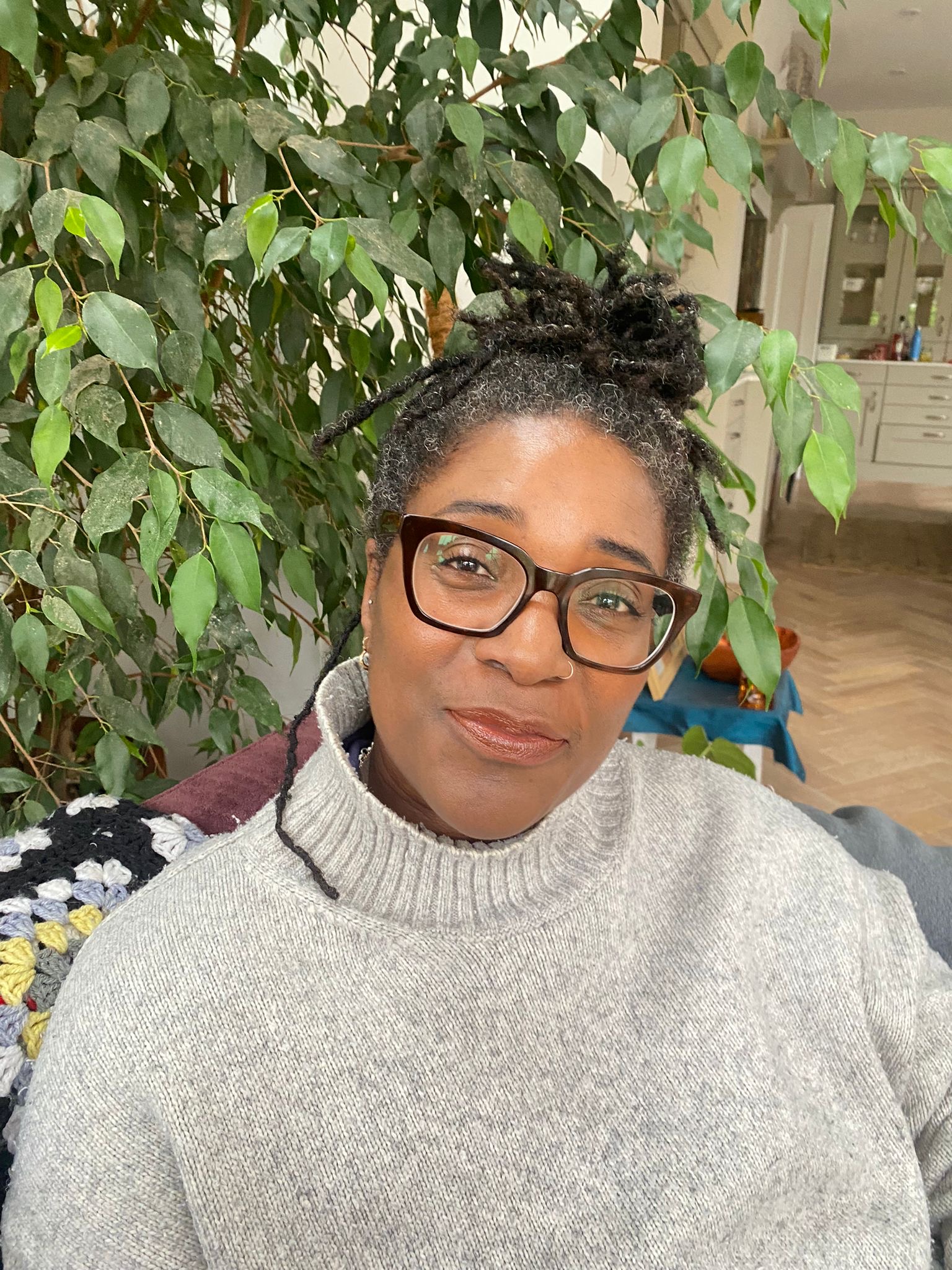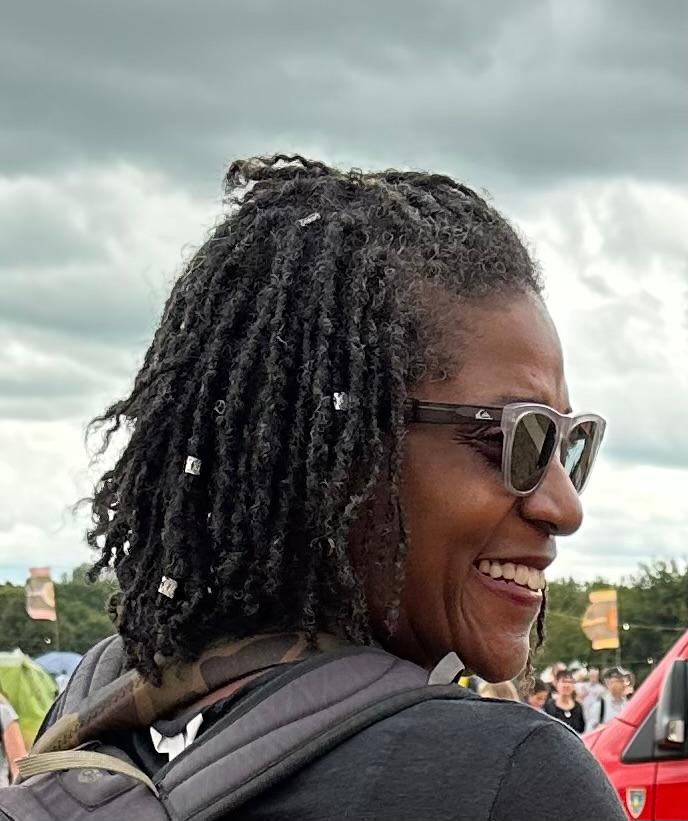
Me, aged 58, July 2023
Black don’t crack…
As I have aged – particularly since I passed 40 – the quality of my skin has been commented on. My white friends had started to see signs of ageing like wrinkles in themselves and noticed I seemed to be lagging behind.
There is some difference in opinion as to why this time lag is a thing. There are some who say the layers of black skin are thicker. Others say black skin cells are more compact and we have an abundance of collagen. Whatever the reason it is true that our ageing process is slower and starts later than our white contemporaries.
Black skin is different from white skin. And here are some of the ways in which it differs:
Hyperpigmentation
It is the amount of melanin in black skin which determines the degree of darkness. More melanin = darker skin.
However, in black skin, hyperpigmentation can mean the appearance of severe and stubborn patches of darker skin. This is particularly apparent after skin cells have become irritated or inflamed (after bites, spots, eczema, acne, burns etc..) when post-inflammatory hyperpigmentation is often an issue. This is why black people are particularly encouraged not to squeeze their spots. This means there is not only the skin condition to consider but also what follows.
Melasma/Chloasma – when large areas of pigmentation show from the forehead down to the neck. It is common in pregnancy. For most of us, the change in skin colour fades some months after birth. It can also crop up in perimenopause and in response to sunlight exposure.
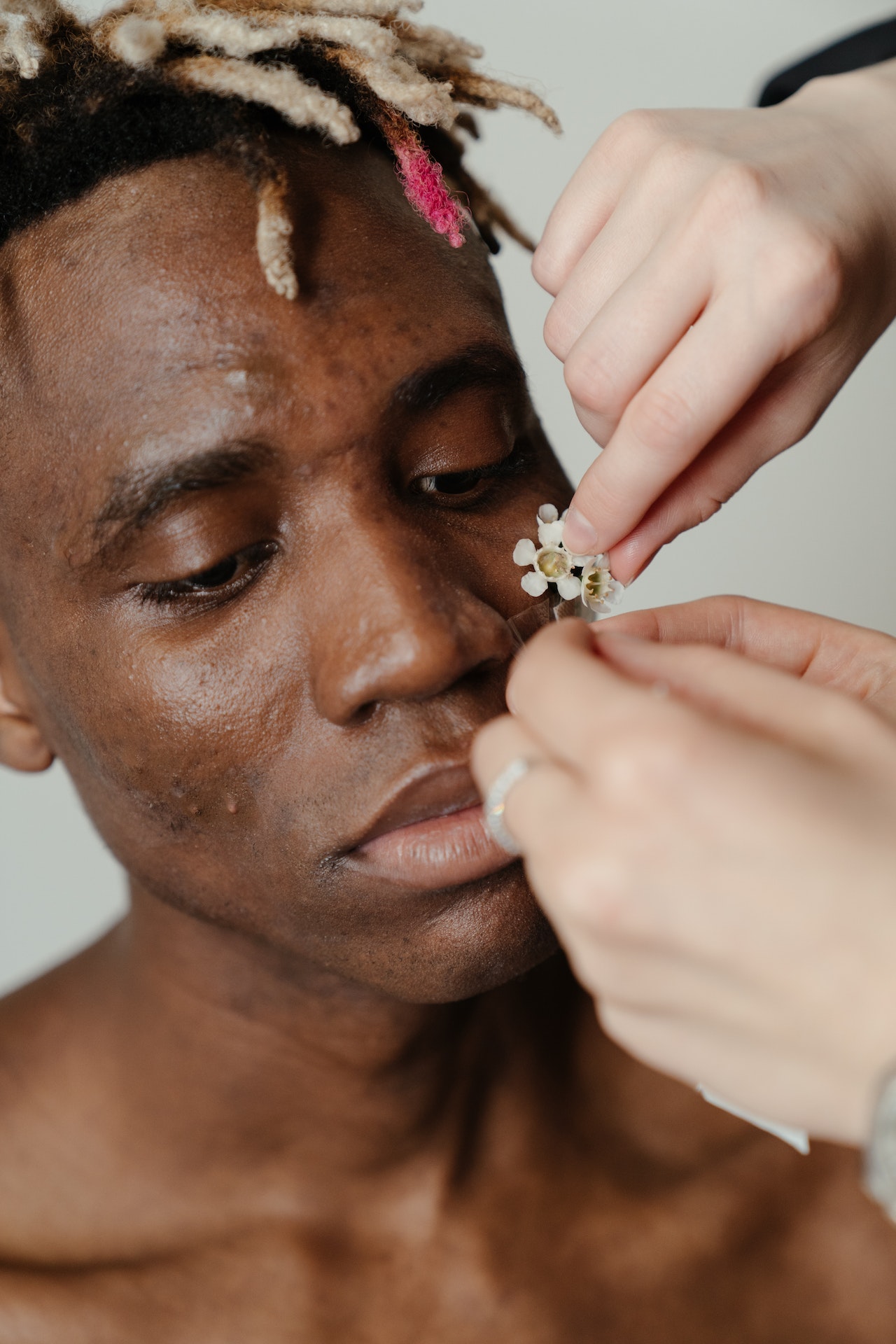
Acne leaves dark patches.
You can read about my homeopathic approach to acne in my free downloadable ebook here.
In terms of black skin and acne, there is an additional issue. Even after acne has cleared either keloids (raised scars after wounds) or post inflammatory hyperpigmentation can be a problem. The harsh treatments often used to deal with acne can also leave scars and dark patches which are difficult to shift.
Our skin is drier
We’ve fewer ceramides (fatty acids that form a waxy barrier) and our skin produces less sebum (a naturally occurring oil that lubricates and protects the skin). As a result, our skin is drier. And, for most of us, needs daily moisturisation.
Over the years I have changed the products I use on my skin. Right now my favourite is jojoba oil. Cold pressed and organic. It has a ph similar to skin and both moisturises my skin and keeps it moisturised. I use it on my face too mixed with 10 drops of Palmarosa essential oil. Great smell and my skin loves it.
Not everyone’s skin has the same needs. There was a time I was using castor oil on my body and now find it too heavy and thick. Coconut oil has always sat on my skin – as such it’s not a favourite of mine. Others swear by it.
My advice, as always, is to avoid all petroleum based products (including those containing liquid paraffin) such as Vaseline. You’ll be surprised, in trying to avoid those ingredients, to find how prevalent they are in skin products.
Yes, our skin does need protection
And that includes protection from the sun. Our increased melanin gives us single digit SPF and without sun cream protection, we will experience sun damage.
It also needs protection from harsh, sebum stripping, dehydrating treatment and products. Get in touch if you would like to talk about this.
Be gentle!